
 Back to Press Release
CANbridge Announces Inclusion of Gaurunning® (Velaglucerase-beta for Injection), a Class 1 Innovative Drug, in China’s First Commercial Health Insurance Innovative Drug List
Suzhou, China, December 7, 2025 – CANbridge Pharmaceuticals, Inc. (1228.HK), a global biopharmaceutical company, with a foundation in China, committed to the research, development and commercialization of transformative therapies to treat rare diseases, announced today that Gaurunning (velaglucerase-beta for injection) – China’s first domestically independently developed and manufactured class 1 innovative enzyme replacement therapy – has been successfully included in China’s first “Commercial Health Insurance Innovative Drug List” (the “List”), which will officially take effect on January 1, 2026.
As previously disclosed by the National Healthcare Security Administration (NHSA), during the 2025 healthcare insurance negotiations, 121 drug varieties applied for inclusion in the Commercial Health Insurance Innovative Drug List. However, only 19 drugs from 18 innovative pharmaceutical enterprises were ultimately included, covering therapeutic areas such as oncology, rare diseases, and chronic diseases, including 9 Class 1 innovative drugs.
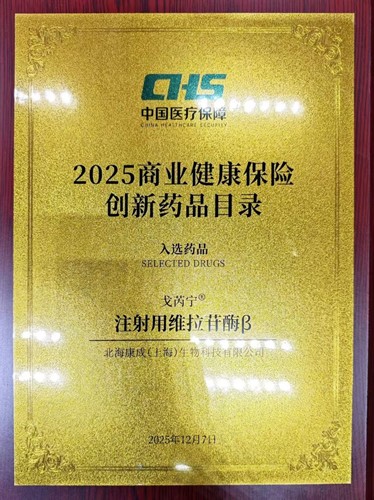
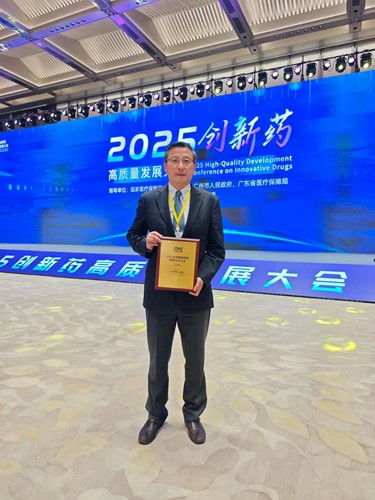
Gaurunning was approved for marketing on May 13, 2025, as China’s first domestically developed and produced long-term enzyme replacement therapy for adolescents (12 years and older) and adults with Type I and Type III Gaucher disease. It is also the first innovative biologic in China to pass the segmented production inspection for biological products. On July 2, the first prescription of Gaurunning was issued at Xinhua Hospital Affiliated to Shanghai Jiaotong University School of Medicine, marking its official entry into clinical practice and promising to significantly improve medication accessibility for domestic patients.
We are delighted to announce the inclusion of Gaurunning in China’s first Commercial Health Insurance Innovative Drug List, enabling more domestic patients to access high-quality, internationally comparable innovative therapies developed locally,” said James Xue, Ph.D., CANbridge Founder, Chairman and CEO. “This milestone reflects the recognition of rare disease innovative drugs by China’s drug regulatory and healthcare security authorities, their attention to the urgent medical needs of Gaucher disease patients, and the critical role of Gaurunning in filling the gap in domestic enzyme replacement therapy.
“The List focuses on highly innovative drugs not yet included in the NRDL. As a representative example of ‘new quality productive forces,’ Gaurunning’s successful inclusion will ensure that Gaucher disease patients have access to affordable, safe, and effective domestic enzyme replacement therapy, receiving broader and more comprehensive treatment coverage. Driven by the healthcare security system’s support for the high-quality development of the pharmaceutical industry, CANbridge will continue to deepen the domestic R&D, production, commercialization, and accessibility of rare disease drugs, bringing more innovative treatment options to Chinese patients.”
About Gaurunning for Injection (Velaglucerase-beta)
Velaglucerase-beta for injection is the first domestically developed recombinant human glucocerebrosidase ERT in China, now approved for clinical use in treatment of Type I and Type III Gaucher disease patients. Most Gaucher disease patients are Type I and Type III, which are chronic non-neuronopathic and chronic neuronopathic forms, respectively. velaglucerase-beta is administered as an intravenous infusion and is intended to supplement the lack of glucocerebrosidase in the lysosomes of GD patients.
The pivotal clinical trial of velaglucerase-beta achieved positive top-line data in August 2024. The velaglucerase-beta pivotal trial is a randomized, double-blind, dose-comparison study designed to evaluate the efficacy, safety, and pharmacokinetics of intravenous velaglucerase-beta administered every other week in newly treated Gaucher Disease (GD) patients, with an extension period. The results demonstrate that the study successfully met its primary efficacy endpoint, showing a statistically significant mean percentage reduction from baseline in spleen volume at nine months for both the 60 U/kg dose (P<0.0001) and the lower 30 U/kg dose (P<0.001). The primary endpoint of this trial protocol has been agreed upon by the CDE.
About Gaucher disease (GD)
Gaucher disease, one of the most common lysosomal storage disorders, is a rare inherited genetic metabolic disease caused by autosomal recessive mutations in the GBA gene located on chromosome 1q22 and affects both males and females equally. Gaucher disease is a clinical spectrum that comprises Type 0 (perinatal-lethal), Type I (chronic non-neuronopathic), Type II (acute neuronopathic), and Type III (chronic neuronopathic) forms, with Types I and III surviving into adulthood. Gaucher disease is caused by a deficiency of glucocerebrosidase (acid b-glucosidase), an enzyme that helps break down a cellular membrane glycosphingolipid called glucocerebroside (glucosylceramide) inside lysosomes. As a result, glucocerebroside accumulates primarily in cells of the monocyte-macrophage lineage (Gaucher cells) within certain organs, leading to splenomegaly, hepatomegaly, anemia, thrombocytopenia, bone pain and fractures, and in the most severe forms (perinatal-lethal, Types II and III), early neurological symptoms. For 30 years, recombinant human glucocerebrosidase enzyme replacement therapy (ERT) has been the standard of care for Gaucher disease, with clinical trials and real-world data demonstrating significant improvement in the major non-neurological signs and symptoms of disease and quality of life. There were 3,000 patients with Gaucher disease in China in 2020, according to Frost & Sullivan.
About CANbridge Pharmaceuticals Inc.
CANbridge Pharmaceuticals Inc. (HKEX:1228) is a global biopharmaceutical company, with a foundation in China, committed to the research, development and commercialization of transformative therapies for rare disease. CANbridge has a differentiated drug portfolio, with 3 approved drugs and a pipeline of 7 assets, targeting prevalent rare disease indications that have unmet needs and significant market potential. These include Hunter syndrome and other lysosomal storage disorders, complement-mediated disorders, hemophilia A, metabolic disorders, rare cholestatic liver diseases and neuromuscular diseases. The CANbridge Next-Generation Innovation and Process Development Facility is developing novel, potentially curative, gene therapies for rare genetic diseases, including Pompe disease, Fabry disease, spinal muscular atrophy (SMA), Duchenne muscular dystrophy (DMD) and other neuromuscular conditions, and collaborates with world-leading researchers and biotech companies. CANbridge global partners include: Apogenix, GC Pharma, Mirum, Wuxi Biologics, Privus, UMass Chan Medical School, the University of Washington School of Medicine and Scriptr Global.
For more on CANbridge Pharmaceuticals Inc., please go to: www.canbridgepharma.com.
Forward - Looking Statements
The forward - looking statements made in this article are only related to the events or information as of the date of making the statements in this article. Unless required by law, we have no obligation to publicly update or revise any forward - looking statements, whether due to new information, future events, or other reasons, after the date of the data on which the statements are based or to reflect the occurrence of unforeseen events. You should read this article in its entirety and be aware that our actual future results or performance may differ materially from our expectations. In this article, any statements or references to the intentions of us, any of our directors, or our company are made as of the date of this article. Any of these intentions may change with future developments.
——For scientific communication purposes only.

